Cabinet Glaze Finishes For Dark Wood (Stunning Ideas)
Dark wood cabinets have a rich, timeless beauty—but sometimes they need a little something extra to really SHINE. That’s where cabinet glaze finishes for dark wood come in. At Fargos Art in Houston, we’ve transformed hundreds of dull, flat cabinets into showstopping pieces that add depth, dimension, and character to kitchens and bathrooms all over the city.
Glazing is one of those techniques that looks simple but requires a skilled hand to get right. Done well, it highlights the grain, deepens the color, and gives your cabinetry that custom, high-end feel. In this guide, we’ll walk you through everything you need to know—colors, techniques, application steps, and the mistakes to avoid.
What Is Cabinet Glaze and How Does It Work on Dark Wood
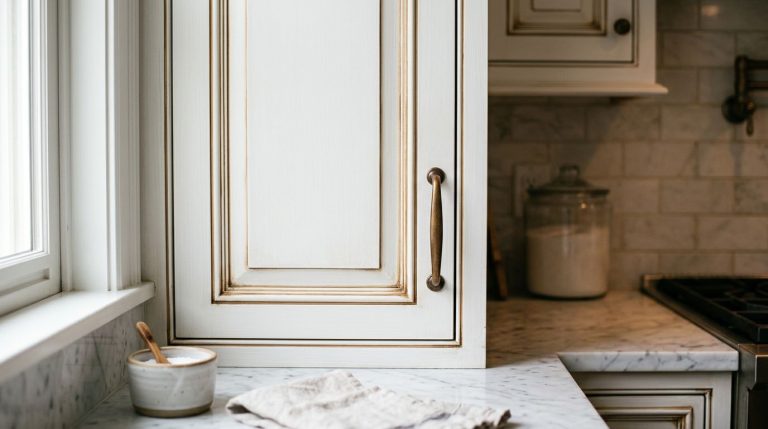
Cabinet glaze is a translucent, tinted medium applied over a base coat (or directly over stained wood) to add depth and highlight details. Think of it as a thin, semi-transparent layer that settles into the grooves, corners, and grain of your cabinets. On dark wood, glaze doesn’t cover the color—it ENHANCES it.
The magic happens in how glaze pools in recessed areas. Those raised panels, decorative molding, and edge details suddenly pop with contrast. If you’re curious about the science behind it, we break down exactly what glaze does for cabinets and why it makes such a dramatic difference. Here’s how it works on darker tones:
- Adds dimension — Glaze settles into crevices, making details stand out.
- Deepens color — A darker glaze intensifies the wood’s natural richness.
- Softens or ages — Antique glazes create a warm, lived-in look.
- Highlights grain — Wood grain becomes more visible and textured.
- Unifies the finish — Glaze can blend inconsistencies for a cohesive appearance.
Best Glaze Colors for Dark Wood Cabinets
Choosing the right glaze color is HALF the battle. The wrong shade can muddy your cabinets—but the right one? Pure magic. Here are our favorite glaze colors for dark wood, based on the finishes we create most often for Houston homeowners.
Black Glaze
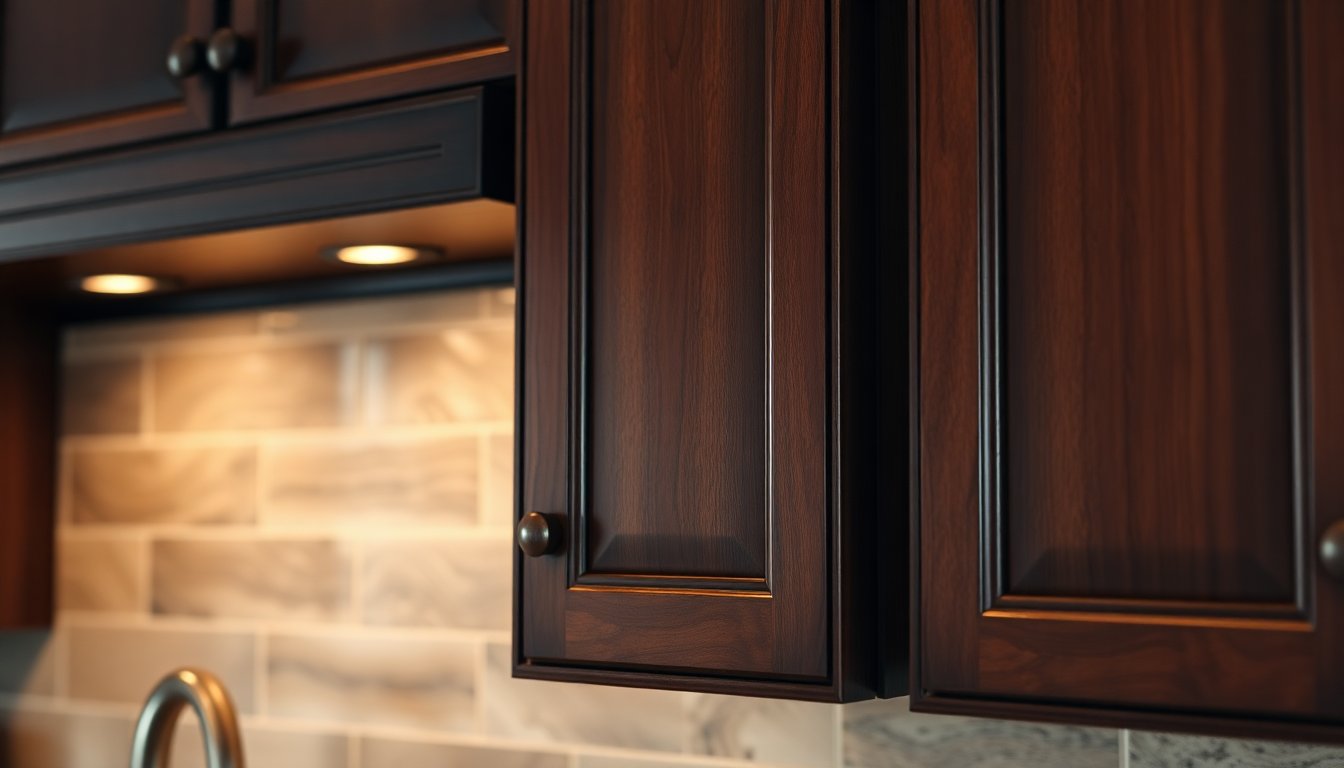
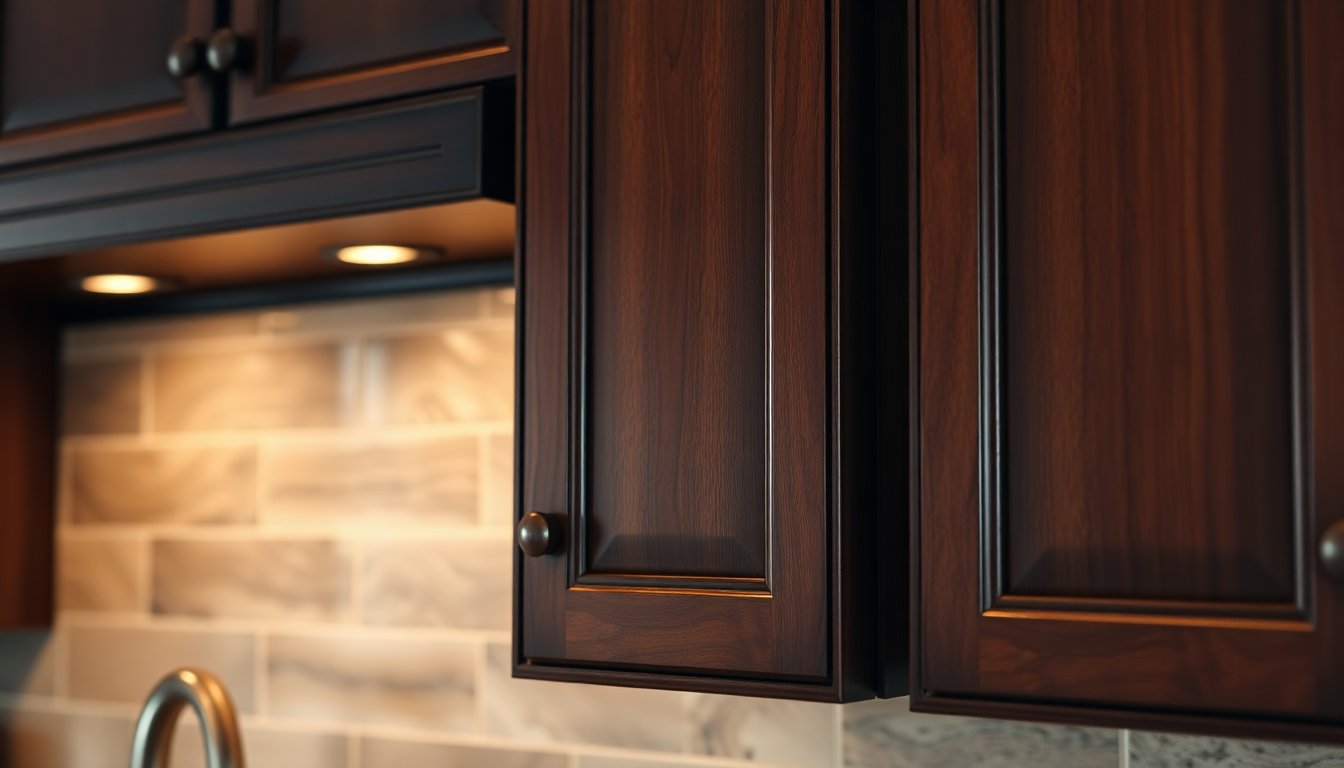
For espresso, walnut, or mahogany cabinets, a black glaze deepens the tone even further. It creates a dramatic, moody look that works beautifully in modern and traditional kitchens alike. The recessed areas darken slightly, giving a subtle, sophisticated contrast.
Chocolate Brown Glaze
A warm chocolate glaze is a natural fit for dark wood. It enhances the wood tones without shifting them too dramatically—perfect if you want richness WITHOUT a stark contrast.
Gray Glaze
Want to cool things down? A gray glaze cuts the warmth of dark wood and gives it a more contemporary edge. It’s especially nice in spaces with modern hardware and neutral countertops.
Van Dyke Brown Glaze
This classic antiquing glaze has a slightly reddish-brown hue that adds vintage charm. It’s fantastic for creating that heirloom, custom-furniture look on dark cabinetry.
Gold or Metallic Glaze
For a touch of LUXURY, metallic glazes in gold or bronze catch the light and add glamour. These work best as accents—on trim, molding, or a statement island—rather than on every surface.
Popular Cabinet Glaze Finish Techniques for Dark Wood
There’s more than one way to glaze a cabinet. The technique you choose completely changes the final look—from subtle depth to bold, dramatic character. Below are the most popular methods we use at Fargos Art. If you want to see how different approaches suit different aesthetics, our guide to cabinet glaze finishes for kitchen styles is a great place to start.
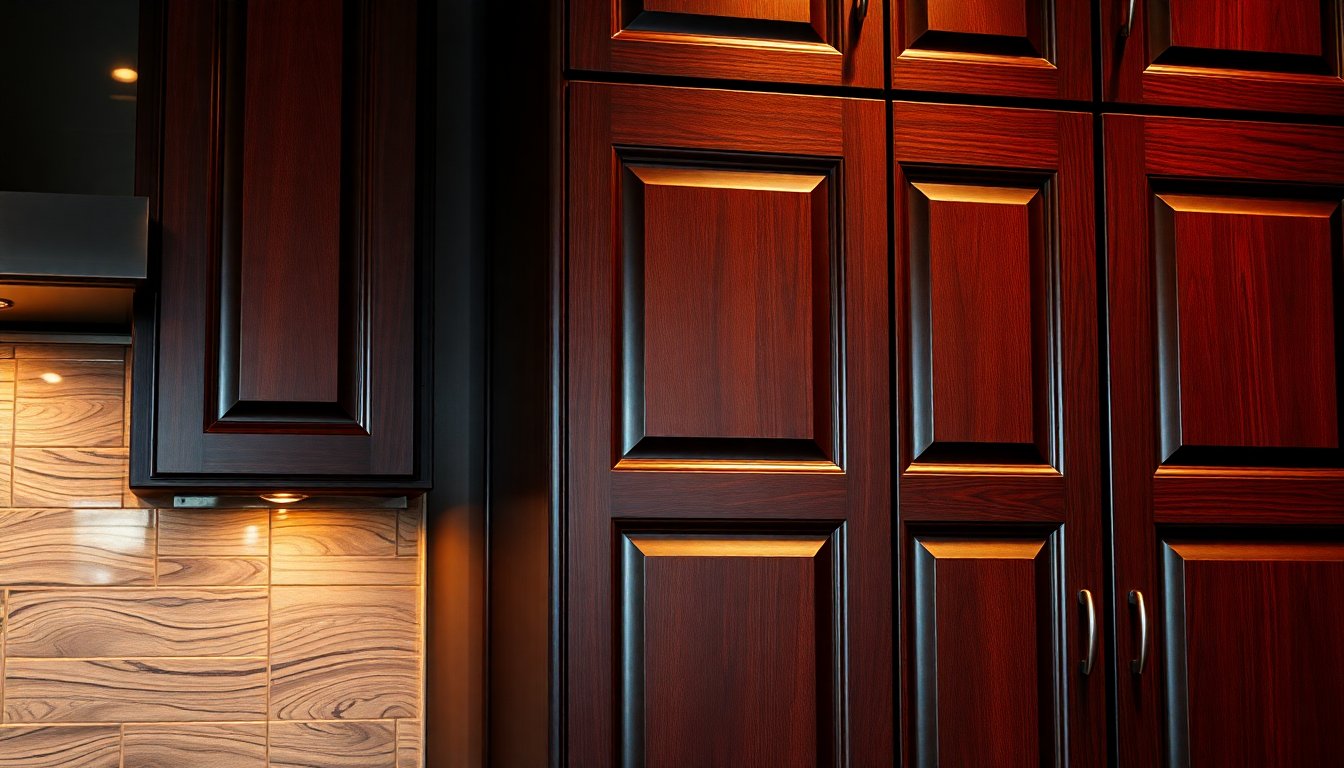
- Standard (Wipe-On, Wipe-Off) Glaze — Apply glaze, then wipe most of it away, leaving color in the recesses. Clean and classic.
- Antique Glaze — Leave more glaze in corners and along edges to mimic natural aging and wear.
- Pit Glaze — Glaze settles only into the deepest grooves and details for a subtle, refined effect.
- Cerused Finish — Glaze (often light) is worked into open grain to create striking contrast lines.
- Dry Brush Glaze — A nearly dry brush drags glaze across surfaces for a textured, brushed look.
- Full-Body Glaze — More glaze is left on for a heavier, more dramatic color shift.
How to Apply Glaze to Dark Wood Cabinets Step by Step
Applying glaze properly takes patience and the right materials. While we always recommend professional work for the best results, here’s the process we follow—and if you want to attempt it yourself, our detailed breakdown on applying cabinet glaze finishes covers even more tips.
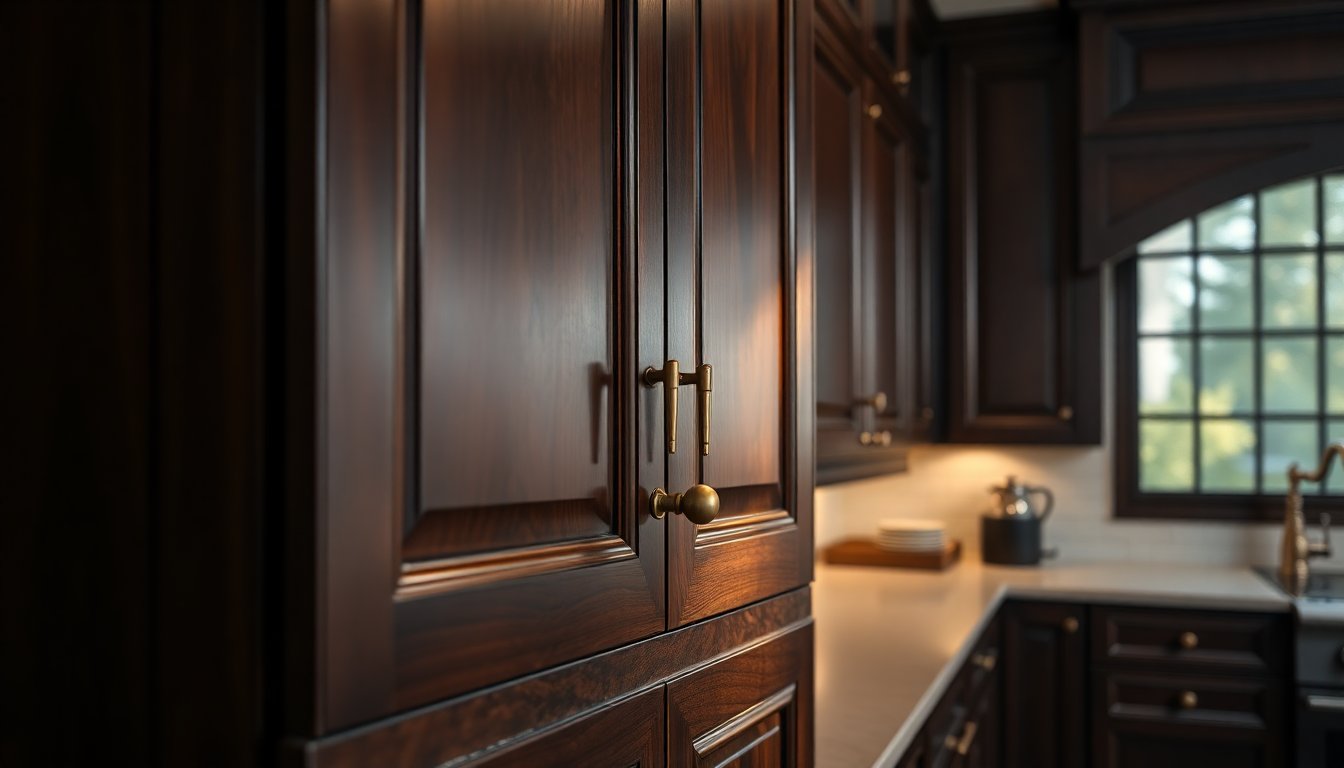
- Clean thoroughly — Remove all grease, dust, and grime. Glaze won’t adhere to a dirty surface.
- Remove hardware and doors — Take off knobs, pulls, and hinges. Label everything so reassembly is easy.
- Lightly sand and prep — Scuff the surface so the glaze grips. Wipe off all dust afterward.
- Apply a base or sealer (if needed) — On stained wood, a clear coat helps control how the glaze moves.
- Brush on the glaze — Work in small sections so it doesn’t dry before you can manipulate it.
- Wipe back the glaze — Use a clean cloth to remove excess, leaving color in the details.
- Adjust and blend — Check for consistency. Add more glaze to deepen, or wipe more to lighten.
- Let it dry completely — Rushing this step ruins the finish. Follow the product’s cure time.
- Seal with a protective topcoat — A clear finish locks in the glaze and protects against wear.
- Reattach hardware and doors — Once fully cured, put everything back together.
Pros and Cons of Glazing Dark Wood Cabinets
Glazing isn’t for every project—but for many, it’s a GAME CHANGER. Before you commit, it helps to weigh the benefits against the potential downsides. Here’s an honest look at both sides based on our experience refinishing cabinets across Houston, River Oaks, Memorial, and beyond.
- Pro: Adds incredible depth and dimension to flat, dark cabinets.
- Pro: Highlights architectural details and wood grain.
- Pro: Creates a high-end, custom look for a fraction of replacement cost.
- Pro: Can update dated cabinets without a full remodel.
- Pro: Hides minor imperfections and inconsistencies.
- Con: Requires skill—uneven application shows easily.
- Con: Time-consuming, especially with drying and curing.
- Con: On very dark wood, subtle glazes may be hard to notice.
- Con: Poor prep leads to peeling or flaking down the road.
Common Mistakes to Avoid When Glazing Dark Cabinets
We’ve seen plenty of DIY glaze jobs go sideways—and most of the problems trace back to a handful of avoidable mistakes. Whether you tackle it yourself or hire a pro, keep these pitfalls in mind so your cabinets look flawless (not blotchy).
- Skipping the prep — Grease and dust are the #1 reason glaze fails to adhere.
- Working too large an area — Glaze dries fast. If you can’t wipe it back in time, you get streaks.
- Choosing the wrong color — Too dark a glaze on dark wood can look muddy and flat.
- Applying glaze too thick — Heavy application looks sloppy and hides the wood’s beauty.
- Forgetting to seal — Without a topcoat, the glaze wears off quickly in high-use areas.
- Rushing the drying time — Impatience leads to smudges, streaks, and uneven finishes.
- Not testing first — Always test on a hidden door or sample before committing.
- Using the wrong tools — Cheap brushes and lint-heavy rags leave marks and fibers behind.
Conclusion
Cabinet glaze finishes are one of the most effective ways to bring dark wood cabinets to life. From deep chocolate and black glazes to metallic accents and antique techniques, the right approach adds depth, character, and that coveted custom look—without the cost of replacing everything. Just remember: proper prep, the right color, and a careful hand make ALL the difference.
At Fargos Art, we specialize in cabinet glaze finishes, faux painting, Venetian plasters, and decorative finishes throughout Houston, River Oaks, Memorial, Tanglewood, Upper Kirby, West University Place, Bellaire, Katy, Spring Branch, and Sugar Land. If you’re ready to transform your dark wood cabinets into something truly stunning, we’d love to help you bring your vision to life.